Back in May, the Vera Iconica Interiors team attended Denver Design Week and visited a presentation at Carter Inc. by artist Mary Jo Hoffman, who released a book called Still: The Art of Noticing.
The book is built entirely on her daily meditative practice, rooted in the idea that each year contains seventy-two microseasons. That practice has since expanded into a wallpaper collection and textiles, in addition to the book, and centers on presence, mindfulness, and the art of noticing — the beauty in something as small as a shadow on a wall.
The presentation resonated deeply with my interiors team and directly ties back to how our whole firm thinks about design: our ability to create experiences and moments that help people notice more — their surroundings, themselves, their lives.
We always do site visits for our projects — but how limiting is it to collect specimens only once, versus visiting seasonally, or even monthly, to see how things change? Some changes are physical (a leaf, a blade of grass, shifting color). Others are more subtle — bark on a tree doesn’t change, but the qualities around it do: the color of light, the time of day, the adjacent colors.
This bled into a bigger idea: harnessing that information to find the constants, and using that practice to further our mission of delivering “your true likeness” in a place and in the people — tying back to the underlying thread of self to place.
– Blair Costello, Director of Interiors and Healthy Living
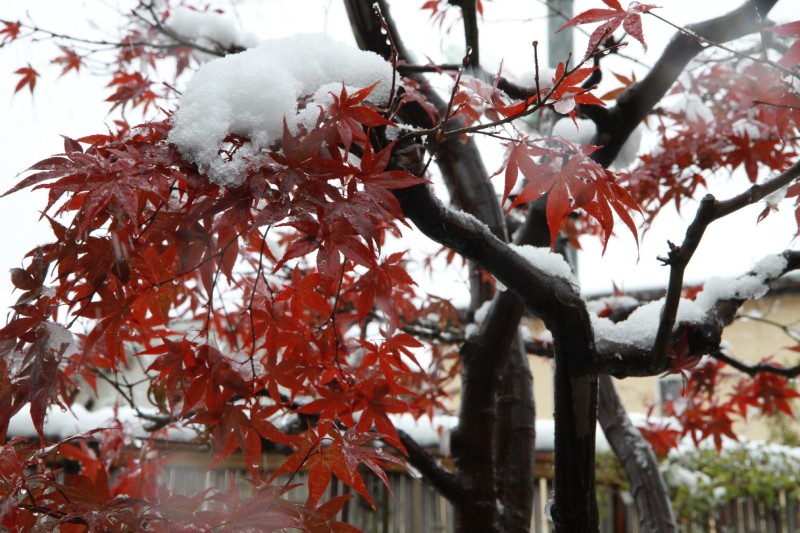
Seasonal Gradations in Japan
That contemplation by the interiors team inspired us to share here an exploration of microseasons and temporality in the context of Japan, cultural ideas which also inspired Mary Jo Hoffman’s work.
In Japan, the concept of microseasons is rooted in the ancient calendar of sekki and ko, adopted over a thousand years ago from China. Sekki are twenty-four solar terms, which are then further divided into seventy-two ko, the microseasons — thus creating a measure of the year with far finer gradations than spring, summer, autumn and winter.
The seasonal cycle opens in February with the first sekki: Early Spring. Then comes Rainwater, and Insects Awaken. By April, Pure and Clear arrives.
In Japan, these are not obscure terms reserved for scholars. They are woven into daily life, surfacing on a television weather report, in a poem learned at school, or on the wrapper of a rice cracker. This is how time is described — as attuned to nature.
Beneath the twenty-four sekki lie the seventy-two ko — microseasons lasting about five days, each named for a single, fleeting occurrence in the natural world: the bloom of peonies, deer shedding their antlers, wheat sprouting beneath the last snow.
The name of each microseason is in itself an invitation to pause, to be still in the transience of each moment. A few favorites, with their approximate dates:
Microseason Dates
Mist starts to linger February 24-28
Distant thunder March 31-April 4
Frogs start singing May 5-9
Rotten grass becomes fireflies June 11-15
Rainbows hide November 22-26
Sharing Time
I’ve lived in Japan for nearly a decade, during which time I’ve come to understand the seasons as one thing we all have in common — how the earth is changing around us, in this moment that we share. They are what bring us together.
Historically, the seasonal calendar provided a framework for Japanese life — a rhythm that told farmers when to sow and harvest, and when to gather for festivals and ceremonies. Today, the seasons continue to define daily life in Japan, a kind of invisible architecture indicating what is special about right now.
The Seasons Made Edible
Japanese cuisine may be the most accessible path into this seasonal awareness. Many foods are understood to belong to a certain time of year, and are relished only then. You cannot return to the same restaurant in a few weeks and enjoy exactly the same dish. Chefs and home cooks alike seek out ingredients at the precise peak of their flavor.
This idea has a name: shun, the brief window in which an ingredient is at its absolute best. To eat in season in Japan is to eat food at the moment it is most fully itself. This is an experience our designers strive to build into our wellness kitchens, to create a space that makes it easy to enjoy what’s ripe.
Walk through Japan in autumn and you can taste the season turning, week by week. In October, everyone craves sanma, Pacific saury, grilled whole in its sleek silver skin and served with grated daikon and fresh local citrus. Stone-roasted sweet potatoes are the perfect street food for a stroll admiring the splendor of yellow gingko leaves against the crisp blue sky. Even convenience stores adjust to the cooler weather, offering steaming portions of oden, the beloved hot pot, right by the register.
In the foods offered, you taste the microseasons of autumn: Swallows leave. Thunder ceases. Crickets chirp around the door. Japan is a country where you don’t have to work to align with the seasons, you just have to let yourself absorb the way things are still being done.
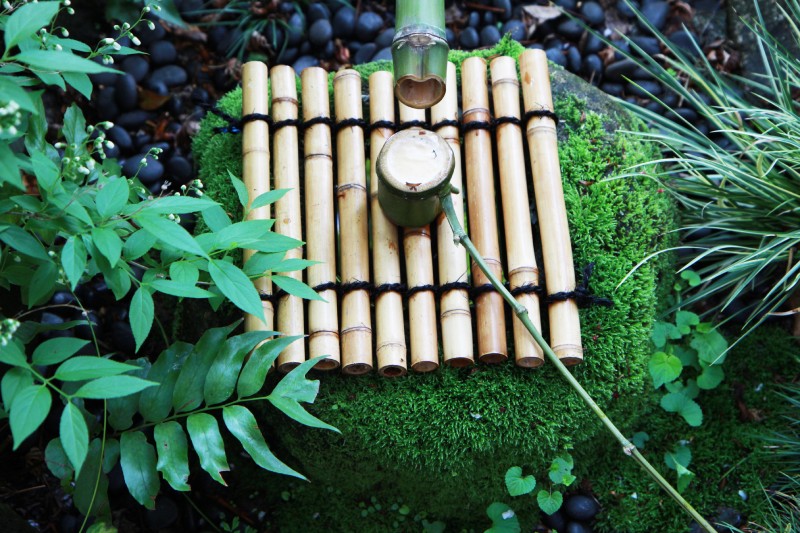
Confectionery as a Landscape
Japanese confectionery, like poetry, captures the ephemerality of natural phenomena. In early spring, the translucence of a delicate jelly can suggest melting snow. When cherry blossoms reach their peak and everyone gathers to view them, sweets take the shape of pink petals and tender green leaves. The confection becomes a miniature of the landscape, a way to linger in a vision that we know will vanish as soon as the wind carries the petals away.
Orange persimmons, ripening on the branch in fall, appear in sweets not only for their flavor, but for the feeling they carry. The word for the fruit, kaki, is itself a kigo: a seasonal word used in poetry to indicate a specific time of year and summon the collective memory of its sensations. Design, at its best, can work the same way. A material, a view, a sound can evoke a season without ever needing to announce it.
Seasons in the Home
In the traditional Japanese home, life is an ongoing dialogue with the outside world, and interiors are curated to reflect this. There is a custom called koromogae, a change of wardrobe, that occurs on the first of June, and then again on the first of October. These are the dates that students switch between winter and summer uniforms, and establishments adjust their dress codes. It also marks a time when households change furnishings and utensils to meet the shifting weather.
June first falls with the microseason Wheat ripens and is harvested, just before Praying mantises hatch. Humidity and heat will soon make the air heavy. Inside the home, a family might switch their tableware from warm ceramics to cool glass and lacquer. Near a window or doorway that catches a breeze, they might hang glass chimes, their delicate sound long thought to bring refreshing relief.
Architecture Built to Respond
The traditional architecture of Japanese homes carries this same responsiveness directly in its structure. Nature is invited into the home, and the house creates ways to mediate our relationship with it: to open and close, hide and reveal, frame and filter. The home is designed to offer effortless ways to interact with the air and the sky, plants and animals, and the full beauty of day and night.
Engawa
An engawa is a narrow wooden veranda running along the outside of a building, a pathway sheltered by deep overhanging eaves. It is neither fully inside nor outside, a threshold space between the two.
Sheltered enough to protect from the rain, the engawa still allows easy conversation across the garden. It lets you open yourself to the world without losing the feeling of being at home.
For heavier storms, the design includes wooden rain shutters that slide into place along a track on the outer edge. The shutters can also be closed at night, for a greater sense of enclosure. When not in use, the shutters are concealed in an elegant storage box at one end of the engawa.
Shoji
Shoji are sliding doors, windows, and room dividers, traditionally framed in wood and covered in translucent paper. The washi paper filters the sun’s rays as they enter a room, softening and diffusing the light.
In the deep heat of Japanese summers, shoji can be removed altogether to improve air flow; sliding the panels open allows the home to be cooled by cross-breezes from the garden. The paper of the screens also absorbs humidity.
In winter, shoji can be opened during the day to welcome the sunlight and closed at night to help retain warmth. The panels themselves store heat, releasing it into the home in the colder hours. A variation known as yukimi shoji, or snow-viewing screens, incorporate a clear glass panel at the bottom, perfect for watching the snow settle on the garden from the coziness of your home.
Tokonoma
The tokonoma is a small alcove built into the wall of a room, designed as a revered space for displaying seasonal art objects. A single hanging scroll may appear there, or a flower arrangement, drawing the eye to this quiet architectural feature that defines the room.
The tokonoma is an invitation to contemplate. The emphasis is on what is chosen, and on the empty space that allows it to be seen. The chosen object changes with the season — plum blossoms in early spring, hydrangea in the rains of summer, bright red maple leaves in autumn, pine in winter — making the alcove a way to experience the expressions of the seasons within the peace of your home.
Framed Views
Japanese architecture also uses the structure of the home to frame and accentuate the changing landscape outside. Openings created by windows and sliding screens offer composed views of the natural surroundings. Often the eye is directed towards a specific feature in a garden — a particular tree, rock, pond, or a distant mountain.
These familiar views change naturally with the passing of time. A frame may hold cascading cherry blossoms in spring, rain bouncing on leaves in summer, glistening foliage in the fall, and the silhouette of bare branches beneath snow in winter. In this way, a portion of the natural world becomes part of the interior experience.

Transforming the Interior
In traditional homes in Japan, interior design is alive. The flow of natural cycles outside are echoed inside by small, intentional changes in materials and furnishings. Wherever we live, we can learn from this way of inhabiting a year, of receiving each season as a chance to transform the atmosphere.
Spring — Open the Home
- Bring in delicate branches or flowers as the landscape awakens
- Let in fresh air and natural light to lift the mood
- Replace heavier winter textiles with linen and lighter cotton
- Let the boundary between inside and outside soften
Summer — Let It Breathe
- Hang bamboo blinds that filter harsh sunlight while allowing air to move
- Welcome the summer soundscape — rain, insects, moving water
- Open spaces to encourage cross-breezes and a sense of spaciousness
- Favor white and light-toned natural fabrics
Autumn — Look Within
- Introduce heavier fabrics like wool, and richer, warmer tones
- Create a quiet place to view the moon as nights get longer
- Place a simple arrangement of tall, feathery grasses by a window
- As the garden quiets, turn towards the hearth for gathering
Winter — Create Warmth and Enclosure
- Layer the home with thicker textiles: rugs, wool, soft throws.
- Draw screens and curtains closed earlier for enclosure
- Gather around a source of warmth — a fireplace or a kotatsu, a low heated table
- Display winter branches to keep the connection to the landscape alive
As a design firm centering nature, Vera Iconica is continually looking to deepen our own perception of it. Japan’s sophisticated temporality is a way to notice more, and to consider how design might help us experience the fluidity of the natural world more fully.